A model
2009-12-05 · Original WordPress address
Blanchard and Gali (2008) incorporate unemployment into the standard model. They have some interesting findings, but this one stuck out:
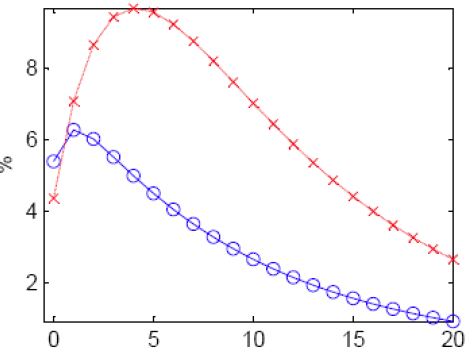 This is the response of the unemployment rate over time to a 1% decrease in productivity of the economy (a "real" shock) WHEN the Fed has a inflation-only target (i.e. it doesn't care about unemployment). Blue is the response in the model when its calibrated to look like the American economy and red is the response when its calibrated to look like Europe. Unemployment keeps increasing after the shock for a couple periods and then gradually declines. Look familiar?
Here's the same graph but for when the Fed has the *optimal* policy of targeting a weighted average of inflation and unemployment:
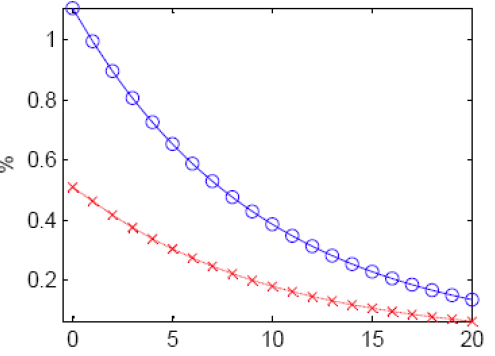 Unemployment still jumps but it doesn't have the hump shape. More importantly, notice how little the unemployment increases when the Fed is following optimal, or best, policy... almost an order of magnitude difference in the response of unemployment.
What does this mean? This paper gives us two ways to interpret what happened since last Fall. One, there was a small to medium sized real shock but because the Fed cares too much about inflation, unemployment sky rocketed. Reality looked (and looks) like the first graph. Or two, the Fed is following optimal policy but there was a huge real shock. Our reality is more like the second graph, but amplified.
Ironically, those making a bunch of noise about banking regulation, centering the blame for the recession on the financial sector, are arguing for the second graph. My impression is that those people are also more likely to be agitating for more aggregate demand policy. The second graph has the Fed acting optimally, i.e. there's no need for further stimulus because the Fed is doing everything necessary. If you buy the logic of this paper, however, you can't have it both ways.
PS - This model also has a positive response of inflation to the real shock. Given we saw a negative response last Fall there's still room for a monetary shock in the story.